

Blessing / Empowered and Consecrated / Activated
_来自小红书网页版.jpg)
_来自小红书网页版1.jpg)
_来自小红书网页版.jpg)


To step into a Daoist temple or a traditional Chinese home is to enter a space where objects are more than mere matter. A sword is not just metal; it carries authority. A pendant is not just jade; it holds protection. This transformation is the work of two profound and often misunderstood rituals: Jiachí (加持, Empowerment/Consecration) and Kāiguāng (开光, Enlightenment/Opening the Light). These are not simple blessings, but precise alchemical processes that bridge the human and the divine, infusing objects with sacred function and conscious spirit.
At the core of these practices lies the Daoist view of the universe as an interconnected field of Qi (energy) and Ling (spirit/numinous power). A newly crafted object, while beautiful, is considered "dormant" or "unawakened." It contains potential but lacks a specific sacred resonance and connection to the celestial realm. The purpose of Jiachí and Kāiguāng is to forge this connection, turning an ordinary item into a Daoist implement (法器) or a sacred anchor.
Jiachí (加持): The Imbuement of Power
Think of Jiachí as charging or consecrating an object. It focuses on transferring and sealing specific energies and intentions into the vessel.
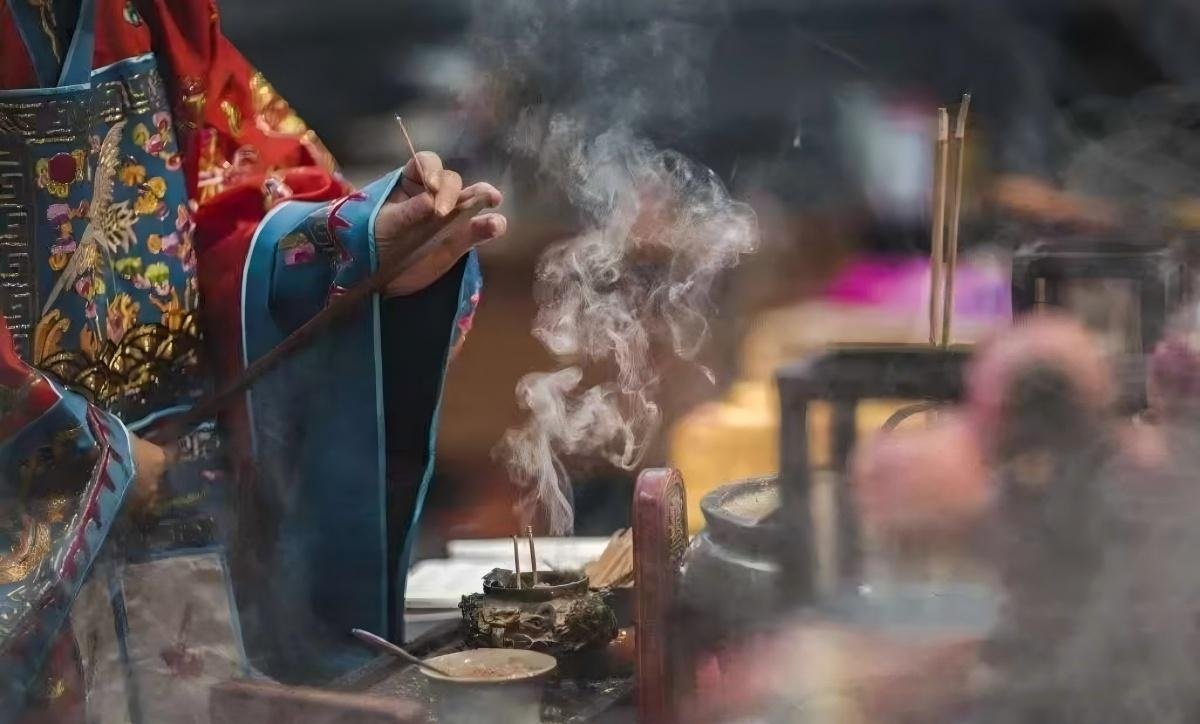
The Process: A Daoist priest (Daoshi), through deep meditation, mantra chanting, and the use of ritual tools (like the sword, command seals, and talismanic scripts known as Fúlù), gathers and directs cosmic and divine Qi. He then focuses this empowered energy into the object.
The Goal: The object becomes a battery or a talisman for a particular force—be it for protection, healing, wisdom, or calming. It is "loaded" with a program. The efficacy of Jiachí is deeply tied to the priest's own spiritual cultivation and the precision of the ritual.
The Outcome: An object that has undergone Jiachí becomes an active tool. A consecrated seal carries authority; an empowered charm deflects negative influences. Its power is inherent in the energy sealed within.
Kāiguāng (开光): The Awakening of Spirit
If Jiachí is about charging, then Kāiguāng is about awakening and inviting. It is a more solemn and complex ritual, most famously used for statues of deities, but also for important mirrors, bells, or personal guardian items.
The Core Metaphor: "Opening the Light" refers to opening the object's "eyes" and sensory portals, allowing it to perceive and be perceived by the spiritual world, and ultimately to serve as a dignified residence for a celestial presence.
The Ritual Stages: The ceremony is rich with symbolism:
Invitation and Purification: The space and the object are purified. Deities and celestial authorities are invited to witness the ceremony.
Dotting the Light (点窍): The pivotal moment. Using a new brush dipped in cinnabar paste, the priest dots the eyes, ears, nose, mouth, and sometimes the heart and limbs of the statue. Each dot "opens" that organ, symbolically granting it the faculties to see, hear, and receive worship.
The Mirror of Heaven (照光): A bronze mirror is used to reflect sunlight (Yang energy) onto the statue's face, symbolically filling the now-awakened vessel with celestial light and vital Qi.
The Incarnation (安神): This is the essence. Through high-level rituals, scriptures, and invocations, the priest does not createthe god, but invites a fraction of the deity's spirit or consciousness to descend and take residence in the statue. The object becomes a true body or anchor for the divine, a point of contact between the worshipper and the celestial.
The Mandate (敕令): The priest, acting with celestial authority, formally "commands" the awakened implement to fulfill its sacred duties.
For the Chinese people, these rituals are far from superstition. They represent:
A Technology of Connection: They are a sacred technology for making the intangible tangible, creating a direct link to the ancestral wisdom and divine forces that shape our world.
The Sanctification of Craftsmanship: They honor the raw material and the artisan's work by elevating a physical creation into a spiritual vessel.
Psychology of the Sacred: The ritually prepared object becomes a powerful psychological and spiritual anchor. The belief in its consecrated presence fosters mindfulness, reverence, and a sense of protection and order. It externalizes and stabilizes faith.
Continuity of Tradition: Each Kāiguāng ceremony is a re-enactment of cosmic genesis, performed by a priest who is a link in an unbroken lineage tracing back to the celestial masters. It is an act of cultural and spiritual transmission.
To hold a Jiachí-empowered object or to bow before a Kāiguāng-awakened statue is to participate in an ancient, living dialogue between humanity and the cosmos. It is to acknowledge that spirit can inhabit form, and that through reverence
 daosyn
No account yet?
Create an AccountWill be used in accordance with our Privacy Policy
